460 meters per second

Friday, December 5, 2014

Stranger in my land - Tourist for a day

    When encountered with writer's block, one is often advised to "write what you know". This not only makes the writing more fluent, but it also increases our chances of writing something truly remarkable, as by "writing what you know" you are writing what you believe, you are getting in touch with your truth. With this in mind, I decided to do my tourist for the day exercise in a place I know deeply well, my hometown of Manatí, Puerto Rico.
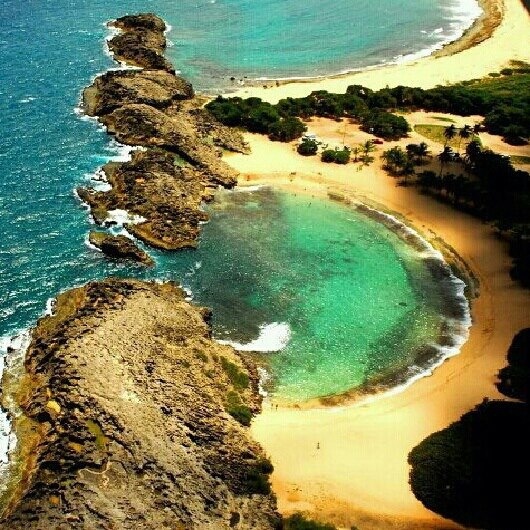
Air view of Mar Chiquita Beach
     Although I was officially born in San Juan, I lived in Manatí my whole life up until college, when I moved to study in San Juan. Another reason why I chose to do my little social experience in Manatí is because I believe where you are physically influences your behavior so much, and I thought in Manatí I would feel more comfortable with my well-known surroundings. I decided to go to Mar Chiquita with my boyfriend, one of Puerto Rico's most breathtakingly beautiful beach. One interesting fun fact that most people who are not from Puerto Rico don't know about is that the people from the metropolitan area (San Juan and nearby municipalities) refer to those who are from farther away as "people from the island". Weird, right? It's so ironic! I remember thinking (the first time I heard this expression): don't they know we're all on an island?! Well, we "people from the island" don't like it, but we also believe that you cannot find beaches as beautiful as ours if you're too close to San Juan...
Mar Chiquita Beach
     What you see in these pictures is what we saw as soon as we stepped out of the car. I've been going to this beach ever since I can remember, but its beauty is still overwhelming, no matter how many times I visit. I sometimes wonder if my exaggerated admiration for it is due to the fact that I want it to be beautiful, as it is located in a place that has made up such a huge part of me. Then, I look at the person standing next to me, and I can see that same fascination in their faces. My boyfriend has lived in Condado his whole life, and when we go to Mar Chiquita his face lights up. Every single time. That's when I know, it truly is beautiful!
     However, this is not the only thing that we see. Since we went to the beach during a busy Sunday, we saw numerous groups of people everywhere with very loud music (mostly bachata and reggaeton) competing with each other. As much as I've spent many of my younger years visiting this very same beach, this time something felt off. For the first time, I felt like I didn't belong. I felt, if I may, "othered".
     For starters, I've never been a huge fan of reggaeton and bachata. Also, I find that a great part of how I was feeling has a lot to do with perspective. I went to the beach on a beautiful Sunday with my books in hand and plans of playing chillout music on my iPod while getting some schoolwork done under the sun... reality had other plans.
My happy math books enjoying a tan
     After realizing I could never compete with the noise of my "ghost of music past", I eventually gave up on my mission and decided to enjoy a good old fashioned beach day, no iPod or studying included. That's when I actually started enjoying my time there, regardless of the bad music. Then, we decided to interact with people as tourists. We went to buy some local fritters (Puerto Ricans love their fried food!), and to our surprise, the person who sold them started to attend to us in English even before we spoke a word! This happens to me all the time (I assume the color of my hair plays a key role in this), but it never happened to me in Manatí before! Wow, did I feel left out!
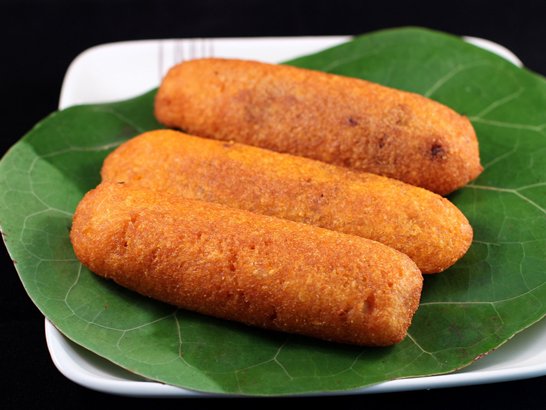
     As the conversation went, the kind gentleman made a nice effort in explaining what an "alcapurria" is. For those of you out there who haven't had the chance to indulge, an alcapurria consists of fried yams filled with spicy ground beef. Very unhealthy, very greasy, very delicious! After paying (he did not try to take advantage of "the tourists" by charging a higher price), we sat on the sand and got lost in our alcapurria's greasy deliciousness too quickly for me to take a picture, so here's one, courtesy of the World Wide Web:
     My visit to Mar Chiquita resulted in a mixture of conflicting emotions. On one side, I felt deeply proud of my beach hometown and all of its beauties, while on the other I sort of felt like a stranger in my own land. After giving it some thought, I've made my peace with it. People move, they grow, they learn, they change... and that's all ok. It's life!

The Rum Diary - Finding oneself

     It is interesting to see how our physical location is so intrinsically bounded to where we are emotionally as well. In "The Rum Diary", we see how our main character Paul goes through an emotional journey that is in great part guided by his travels and the people he encounters throughout them. One of my favorite parts about this movie was being able to see how Puerto Rico may have looked like during the 1950's. I saw the movie with my Dad, who confirmed that most of the representations of the movie were right on point, as they made it look very similar to how life was like back then.
     One of the aspects that the movie clearly emphasizes is the uneven distribution of wealth that was taking place on the island during this time, as we can appreciate a vast majority of poverty while only a few ones enjoyed prosperity. Being a reporter interested in real and substantial stories, Paul intends to write (on the island's only "gringo" newspaper) about the poverty in San Juan. However, his editor immediately prevents him from doing so, as this would negatively affect tourism on the island.
     This automatically makes me think about perspective, and how it is so heavily influenced by the opinions of those surrounding us. It also makes me reflect on the fact that if back then such a relatively small newspaper in a tiny island was able to manipulate the public's opinion for their advantage, then just imagine how much today's mass media contaminates our views on any given subject all the time! Creepy, huh?


     When Sanderson meets Paul, he attempts to win him over by impressing him with expensive goods and offer him seemingly promising opportunities. In a way, him and his colleagues make him feel accepted, ingroup. I think this makes him seriously consider partnering up with them, but both his attraction for Chenault and Sala's trusted advice constantly serve as an inner voice that makes him keep a centered mind. Exposing himself to so many different people from various cultures and places is what mostly gets Paul to learn, grow, and explore his inner journey. So much so, that eventually he ends up finding his inner voice, and fulfilling his dreams of becoming a writer.

Thursday, December 4, 2014

Helping or cheating?

     As I was growing up, my mom always encouraged me to help others everywhere I went. As most Puerto Ricans, I was raised a Christian, and as we would pray at night my mom's favorite prayer was always “God, please put someone in our path tomorrow, preferably a stranger, whom we can give a helping hand; for it is the only way to remotely attempt to repay for all the good that you have blessed us with.” Although I myself am not religious anymore, I do consider myself to be very spiritual, and my mother's wise teachings have proved to be useful and still play a big role in my daily meditations.
     In school, I never dared to even think about cheating. I was not only terrified I would get caught, but I also felt I would be ashamed of myself (even if nobody found out) if I knew my achievements were not really my own. I have always enjoyed the learning process thoroughly, and so for most of my life my classmates thought of me as the bookworm (especially when it came to math). I have always felt great pleasure from helping other people, and tutoring has been one of the ways I've done that through. I must confess, though, that I have been known to “help” other classmates by giving them the answers during an exam, or so “helping” is what I thought I was doing...
     The reason for doing so is that I was always so encouraged to help anyone in need, that whenever I saw someone having a hard time during a test I couldn't help it but to take pity on them and “give them a hand”. A fairly recent experience, however, completely changed my perspective on the matter. Not long ago, I was taking a math exam in college and helped a friend out. I told one of my other math professors whom I've developed a good friendship with about this (we'll call her Lauren), and she made me realize that I had been doing something that was very wrong. She asked: “Would you have done it if it was my class?” I, of course, immediately said no, as this professor is someone I greatly admire and I would never dare to go over her authority. Then she said: “Cool. We're friends, that's nice of you to say and I appreciate it. But you have to respect him (my other professor) and his position as well.” On this particular exam, there were only two A's in the whole class of about 15 students, mine and my friend's. Lauren explained how my professor's perspective on the class was now contaminated by the exam results, and he wouldn't know exactly what difficulty to set it upon because he was wrongly thinking that at least 2 people were understanding the material clearly.
     I'd never thought about it this way. I just thought: "if I'm still gonna get an A, then someone else getting one is not harmful to anybody." WRONG. Not only this, but the person I thought I was helping is actually suffering harm, as by giving them the answers I am depriving them from the opportunity of failing, learning and starting over, which are some of the most important parts of any learning process in life. So, in conclusion, I very much agree with Jim Cooper's perspective on helping vs. cheating, and I think there is a great problem related to this in Puerto Rico, highly influenced by our culture. Since this experience, I have learned to find other ways of truly helping my classmates whenever I can.

What is Puerto Rico?

     My research on conceptions and misconceptions of Puerto Rico delivered some expected yet eye-opening results. First, I'll tell you what I found. I found that Puerto Rico is best known for its beautiful beaches. Pretty much everyone else in the world who has ever heard about Puerto Rico thinks of it as a beautiful paradise vacation destination. As much as this part is true, I couldn't help it but to feel sad about the fact that the perception that others have of our island is that limited, because I feel like we are so much more than just that. I also found out that most people are either angry, confused or let down about our unclear political status. Americans don't think of us as a part of the U.S., yet we aren't an independent country either. Which leaves us with an elementary question at hands: WHO ARE WE?
     Something that many people (even locals) don't realize is that even though we're a pretty small island, there are numerous cultural differences within the island as well. The way people look, talk and act in the center of the island is not the same as how they would in the west coast, or the capital, for that matter. It's all very hard to explain (more so if you're a member of this population that you're attempting to describe and fit into certain categories) because, after all, no one likes being put inside a box.
     No matter how positive or negative other's opinion would be, I found that I was always annoyed by the generalizations. “Puerto Ricans can't speak English.” Uhhh... excuse me?! Or... “they are all uneducated criminals”, or “there's nothing to see but geographical beauty”. All of them I feel failed to capture the essence of Puerto Rico, MY Puerto Rico. I am not particularly proud of the fact that our crime rate is increasingly high and a vast majority of people are economically dependent, but what about us? The students, the doctors, the teachers, the poets, the hard workers... and every other person who is fighting every day to make a difference?
     I, for one, have hope in my generation. Although I understand most opinions about Puerto Rico and where they originate from, I can't help but to feel frustrated about the narrow general perspective, and at the same time optimistic about our future. True: Puerto Rico does have a high crime rate and beautiful beaches, but we also have the best university of the Caribbean, as well as many other assets that make our island truly special.

Recent commercial I shot for Jeep Puerto Rico
enjoying the wonders of our island. Find Waldo... 
(a.k.a. me!!) This was fun to shoot, hope you all enjoy!!

Tuesday, October 14, 2014

A Small Place - My reaction to Chapters 1 & 2

     After reading the first two chapters of her book, I get the sense that Jamaica Kincaid has a lot of resentful feelings -maybe even hatred- against tourists in her country. To me, this group, the "tourists" represents an extensively wide spectrum of people that I, personally, would not dare to classify all together as the author does. I mean, after having been to Antigua myself, I get the sense that not all "tourists" there are the same, since all kinds of people from all kinds of places visit this gem of an island in the middle of the Caribbean every single day, wether it be on a cruise ship or any other mode of transportation.
     However, she still makes this generalization all throughout her book. I believe this to be a great disadvantage for her, not only as a writer, but also as a human being. Having such a limited point of view makes her experiences and thoughts so prejudiced, that this may prevent her from fully taking in and learning from her own life. Then again, one has to stop and think about the relativeness of it all. The truth is that we all carry our own set of experiences and ideas, those who define us and have molded us into the person that we are now. Which means that even my own liberal point of view about all of this, all this giving the tourists "the benefit of the doubt", could be a result of the limitations caused by my own perspective... since Jamaica may lack some knowledge as a result from her limiting standpoint, but she also must possess some knowledge from her own experiences that only she can account for.
     As I kept reading, I noticed that Antigua's history has a great number of similitudes from that of Puerto Rico. We also were colonized, slaved, robbed, and the list goes on... or rather, our ancestors were. Although some of our circumstances were similar, I don't share any of her resentful feelings towards neither Spain nor the U.S, which would be the analogous countries to U.K. in this comparison. Then again, my reality may be a lot different than Jamaica's. Not only are we speaking of two different countries with similar, but at times very different sets of circumstances, but this book was also written during a completely different moment in history than the one that I've had the opportunity to live through. From her book, I feel that in Antigua racism still plays (or played, at the time written) a great part in society's structure. Us Puerto Ricans are so mixed by now (and this is very evident by the physical characteristics from everyone on the island), that it's hard for racism to be as tangible, I guess.
     Regardless of Jamaica's envious feelings origins, I still think that she may have taken her grudge too far. By living under a constant battle against such a broad group of people and holding on to the past, she's only making her own life more difficult and reliving a part of her worst unhappiness. I've always been a firm believer in this: "we can't control what happens to us, but we have the power to choose how it affects us and how we want to react to it." Life would be more enjoyable and the world would probably be a more beautiful place if we were all more captious with our feelings and worked on discarding or working on those that serve no good. Then again, we all know that's easier said than done.

Friday, October 10, 2014

The Small Place of Jamaica's Point of View

     Sometimes certain things from our past or particular events in our lives make us feel like we've hit rock bottom so hard, that it may feel like it's extremely hard to recover. This is what seems to be happening to Jamaica Kincaid in her essay, "A Small Place". It's interesting how everything that occurred in the history of Antigua has affected her so badly, that she's still extremely resentful after almost 500 years.
     As readers, we get the hint that she's not too fond of us from the very beginning. Of course, here she's generalizing and assuming that all of us are tourists in her land. On top of this, here goes another generalization: we're ethnocentric, self-absorbed pricks with a huge ego who live under the effects of eternally blissful ignorance. Of course, I'm paraphrasing here. My point is that Jamaica Kincaid doesn't only seem to dislike tourists, she's also convinced that she has us completely figured out. Both of these generalizations affect her point of view, limiting it and preventing her from seeing the full picture. Of course, the same could be argued backwards, as our lack of empathy or first-hand experience as an Antiguan may serve as a perspective limitation as well. But that's a whole different story.
     Getting back to the author's view, at one point she even says her and her people felt superior to the bad-mannered europeans who went to Antigua to live. As she does this, she may be even lying to herself in order to make up for the fact that she actually feels inferior to them and hiding her own insecurities. One could say this about many passages in her writings, but then again these thoughts could also be coming from the ethnocentric, self-absorbed prick with a huge ego inside of each of us.
     From Kincaid's perspective, we also get the sense that she strongly rejects everything british when it comes to defining her cultural identity, although she admits that the British have had a great cultural influence upon Antigua. However, she clearly does not identify with this herself, as certain things don't make sense to her anymore, such as praying to an English god on Antigua's independence day from England. Simultaneously, she also relates being ill-mannered to being "un-Christian-like", which may seem like a bit of a contradiction. In reality, it seems like Jamaica Kincaid's issues with her cultural identity began after she started questioning the origins of her customs, but she was already so used to these customs that it seems like they became a part of her that she's constantly battling against, trying to let go.

Tuesday, October 7, 2014

Noticing the unnoticed: a final reflection on the Journey Journal

     It's been eight weeks since we first started our Journey Journal in class. As a result, I hold in my hands a recollection of most main events that occurred in my life during this period of time. This may seem funny to you, but I somehow feel different. I feel like I'm a different person from the one who wrote down that first entry... isn't that weird? It's only been a couple of weeks, how can I already feel different? Who we are is not a permanent state, but an active process. We change who we are all the time, it's just one of those journeys that we're so used to, that it's hard to notice we're experiencing it at all. It's sort of like being on Earth and traveling around the sun at 460 meters per second... [pun intended]. :P


     Not only do our identity and personality evolve continuously, but in order to be who we are, we need to first choose who we want to be and then constantly remind ourselves of it. Having it all written down, making each moment so concrete by permanently turning it into ink, makes me think about one of my favorite subjects: time. So tricky, isn't it? It appears to be linear, only it's not (or at least we think it's not). How could so many different things happen to me in just eight weeks?
     I've got a pretty intense and busy lifestyle by choice, mostly because of the mixture between my work and college life, but also because I can't stay put for one second and therefore insist in not only juggling a million things at once, but also working out every day and keeping myself active. But when I say there's been a lot going on I'm not just talking about all this, but also about all the ups and downs in my mood and internal journey as well. Geez, I had no idea us women were that complicated! Reading back on it, I'm amazed by the roller coaster of emotions we go through each day. I don't know how we do it... heck, I don't know how our significant others keep up with it!
Sounds familiar
     All joking aside, after completing my journal I felt a tremendous amount of gratitude. I realized (yet again) that I am so lucky for all the great opportunities in my life, as well as the beautiful people that walk by my side. With the hustle of our daily lives, sometimes it's easy to forget these kinds of things. I found that taking ten minutes out of each day to meditate upon every event, check in with my inner self and keep a record of it all was highly therapeutic. The fact that I had to write every thought as it popped into my head (and many times choose between competing thoughts) played a great part upon making me notice those things that I gave more importance to than others and making me understand my own process of translation between the world and how I internalize it in my mind. Time flies, and sometimes it can make life seem like a flash of residual memories from random events. Writing this journal really helped me tap into each feeling, each thought, and solidify all of these memories, making them remain more vividly and granting me access to greater depths of my soul.

In conclusion... ^